Top Digital Marketing Trends Indian Brands Can’t Ignore This Year
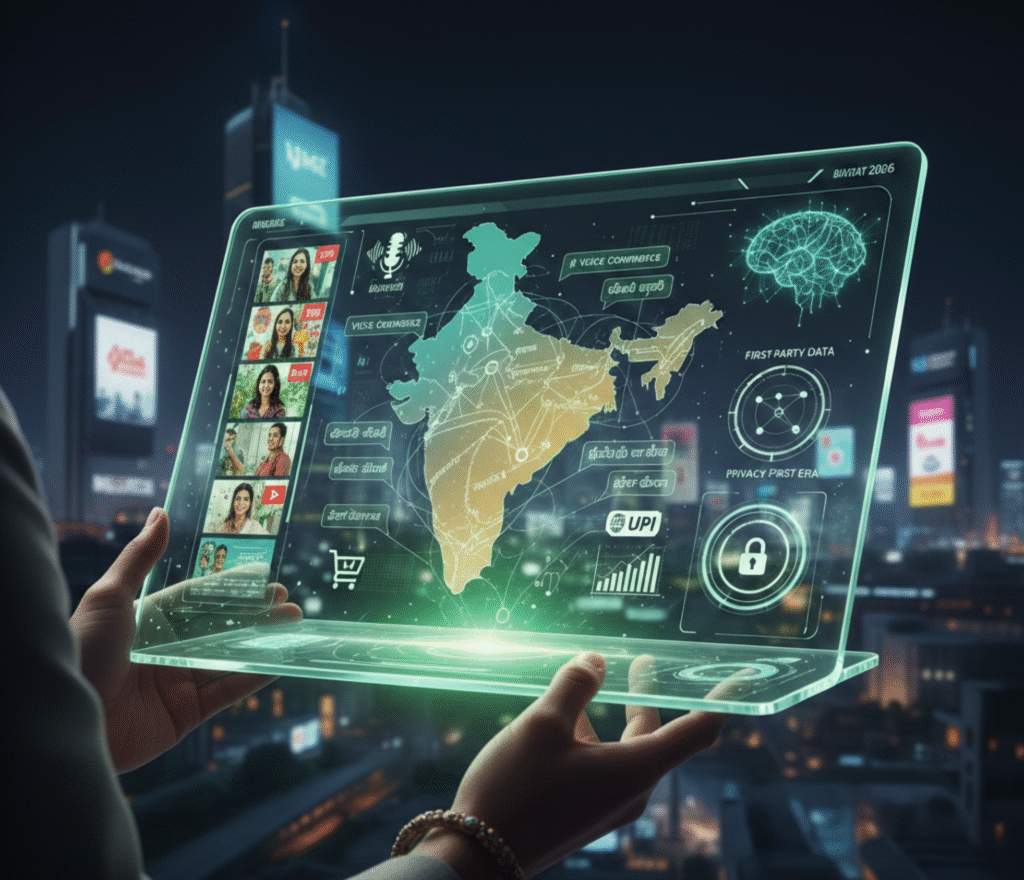
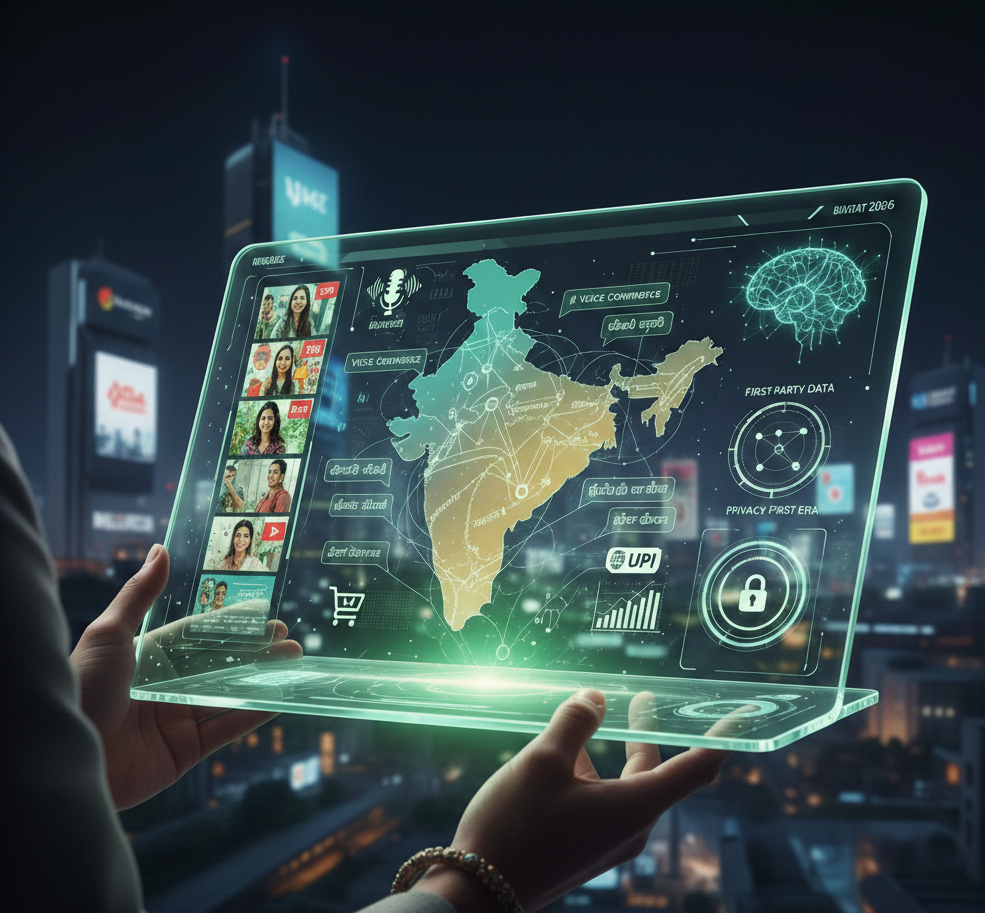
In the ever-evolving landscape of the Indian digital economy, staying ahead isn’t just a competitive advantage, it’s a survival strategy. As we navigate through 2026, the “Digital India” vision has matured into a robust ecosystem of over 900 million internet users, fundamentally shifting how “Bharat” consumes, searches, and shops.
From the rise of Generative Engine Optimization (GEO) to the dominance of regional voice commerce, the rules of engagement are being rewritten. For Indian brands, the focus has shifted from mere “visibility” to “trust-driven relevance.”
Here are the top digital marketing trends that Indian brands cannot afford to ignore this year.
1. The Shift from SEO to GEO (Generative Engine Optimization)
Traditional Search Engine Optimization is no longer enough. With the integration of AI models like Gemini and Search Generative Experience (SGE) into daily browsing, users are increasingly getting direct answers without ever clicking a link.
What’s Changing: Search engines are becoming “Answer Engines.” Instead of a list of blue links, users see a synthesized AI summary.
The Strategy: Brands must pivot to Generative Engine Optimization (GEO). This involves creating authoritative, “people-first” content that AI models can easily parse, cite, and recommend.
Key Action: Use structured data (Schema mark-up) and focus on E-E-A-T (Experience, Expertise, Authoritativeness, and Trustworthiness). AI favours content that sounds like it was written by a human expert, not an AI bot.
2. Hyper-Localization & Vernacular-First Content
The “Next Billion Users” in India aren’t searching in English. Hindi, Tamil, Telugu, Bengali, and Marathi have become the primary languages of the Indian internet.
The Trend: Regional content generates 5 to 2 times higher engagement than English content in India.
Beyond Translation: Brands are moving away from literal translation toward transcreation—adapting humour, idioms, and cultural nuances to fit the local context.
The “Bharat” Opportunity: Tier-2 and Tier-3 cities are the new growth frontiers. If your brand doesn’t speak the local language, it remains “foreign” to a massive segment of the population.
How DigitalNexa Marketing Is Redefining Digital Growth in India
3. Voice Commerce and "Hello! UPI" Integration
Voice search in India has grown by over 35% year-on-year. It’s no longer just for checking the weather; it’s for completing transactions.
Conversational Payments: The launch of Hello! UPI has been a game-changer. Users can now authorize payments via voice commands, making the journey from “Hey Google, find me a red kurta” to “Pay via UPI” completely hands-free.
The Strategy: Optimize for long-tail, conversational keywords. People don’t type “Best AC service Mumbai”; they ask, “Which AC repair shop near me is open right now?”
4. Short-Form Video: The 3-Second Rule
With attention spans shrinking to record lows, short-form video (YouTube Shorts, Instagram Reels, and Moj) continues to dominate.
The Hook: Brands now have less than 3 seconds to stop the scroll. High-budget, polished commercials are being replaced by “lo-fi,” authentic, creator-led content.
Shoppable Video: We are seeing the rise of Video Commerce. Consumers can now tap on a product featured in a Reel and complete the purchase without leaving the app.
The Playbook: Focus on storytelling over selling. Use micro-influencers who have deep trust within niche communities rather than big celebrities with broad, shallow reach.
5. First-Party Data & The Privacy-First Era
With the Digital Personal Data Protection (DPDP) Act in full force and the phasing out of third-party cookies, “owning” your audience is more important than ever.
The Challenge: Relying on platform algorithms to find your customers is becoming more expensive and less transparent.
The Solution: Build a robust First-Party Data strategy. This includes nurturing your email lists, WhatsApp communities, and loyalty programs.
Zero-Party Data: Encourage users to share their preferences voluntarily through quizzes, polls, and interactive tools. This allows for Hyper-Personalization delivering the right offer at the right time based on actual user consent.
6. AI-Powered Marketing Automation
AI is no longer a “buzzword”; it’s the engine under the hood. In 2026, Indian brands are using AI not just to write copy, but to predict behaviour.
Predictive Analytics: AI can now forecast which customer segments are likely to churn or which products will trend during the festive season (Diwali, Eid, Pongal) before it even begins.
Creative Scaling: Tools like Gemini’s Nano Banana allow brands to generate hundreds of ad variations tailored to different regions and age groups in minutes, a task that used to take weeks.
7. Social Commerce & Quick Commerce Integration
The line between social media and retail has blurred completely. In India, “Quick Commerce” (10-minute delivery) is merging with digital discovery.
Immediate Gratification: Brands are now linking their social media ads directly to Quick Commerce platforms like Blinkit, Zepto, and Swiggy Instamart.
The “Phygital” Experience: Augmented Reality (AR) try-ons for makeup, eyewear, and even home decor (like Ikea’s Kreativ) are becoming standard, reducing return rates and increasing buyer confidence.
Conclusion: The Road Ahead
The Indian digital landscape in 2026 is faster, more fragmented, and more automated than ever before. However, the core of marketing remains the same: Trust.